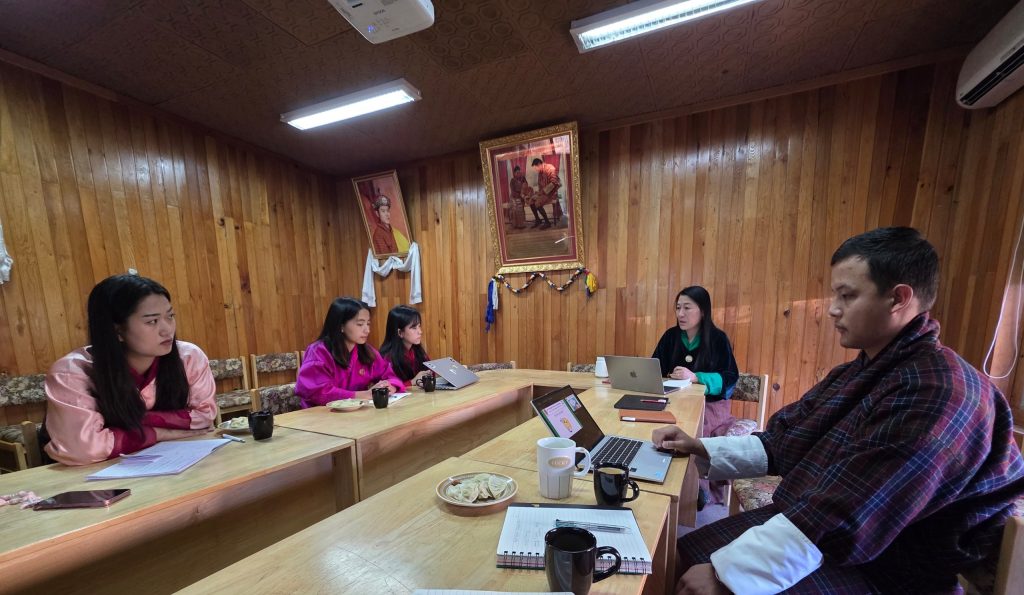





The National Plant Protection Centre (NPPC), Semtokha, Thimphu, received three interns on 2nd December 2025: Ms. Sonam Zangmo (BSc Agriculture, 3rd Year) and Ms. Karma Deki Yangzom (BSc Agriculture, 3rd Year) from the College of Natural Resources, Lobesa, Punakha, and Ms. Dorji Dema (BA Developmental Studies, 3rd Year) from Norbuling Rigter College, Paro for a two-month internship at the Centre. As part of their orientation, the Program Director, Mrs. Yeshey Dema, delivered a detailed presentation on the background of the Centre and the supply mechanism of Plant Protection Products (PPP).
The presentation outlined the progression of plant protection activities in Bhutan, beginning with their initiation during the First Five-Year Plan and expanding steadily as national priorities evolved. It highlighted the gradual introduction of Plant Protection (PP) inspectors, the establishment of regional plant protection units and the development of a formalized pesticide supply chain to ensure organized delivery of services. Over the years, Bhutan discontinued the use of highly hazardous and persistent pesticides, phased out subsidies on plant protection products and enforced strict dealer licensing procedures. These milestones collectively strengthened regulatory control and laid the foundation for the current governance structure, which mandates NPPC to oversee the import, distribution and regulation of all plant protection products in the country.
Mrs. Yeshey Dema also explained the structured supply mechanism that ensures farmers receive the right plant protection products in the right quantities and at the right time. This system involves annual indent collection through gewogs and dzongkhags in July and August, transparent tendering through local dealers, quality testing, price fixation and distribution based strictly on verified demand. The process minimizes risks of overstocking, prevents accumulation of obsolete pesticides and upholds accountability within the system. The Centre follows WHO hazard-based classification of pesticides and prohibits the import of banned or extremely hazardous products, ensuring that environmental and human safety remain top priorities.
Another part of the presentation focused on Bhutan’s past challenges with obsolete pesticide stocks, some of which required international-level disposal efforts. To prevent recurrence, the country has strengthened controls by enforcing strict demand verification, monitoring product shelf life and applying a systematic phase-out approach for chemicals recommended for discontinuation. The Centre continues to advocate for judicious and responsible pesticide use, supported by awareness programs, extension materials and audio-visual resources for farmers, field staff and other relevant stakeholders.
In concluding the session, the Program Director encouraged the interns to be proactive, responsible and engaged during their time at the Centre. She emphasized the importance of awareness and adherence to national pesticide guidelines to ensure safe pesticide use and sustainable plant protection practices. The presentation provided the interns, Ms. Sonam Zangmo, Ms. Karma Deki Yangzom and Ms. Dorji Dema, with a comprehensive understanding of NPPC’s role in Bhutan’s agricultural system, helping them understand the Centre’s contribution to national food security, environmental safety and the wellbeing of farming communities across the country.